Stress and Anxiety: How To Tell The Difference (and What Actually Helps)
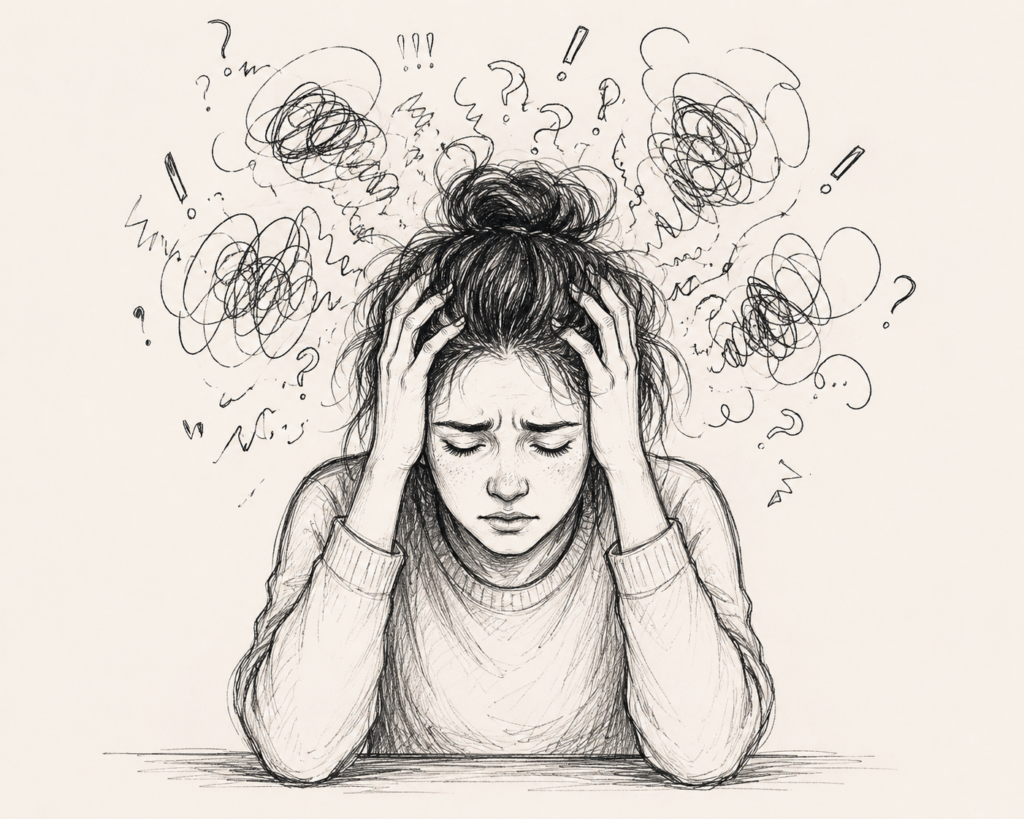
Your heart is racing. Your hands feel restless. Nothing on your to-do list has changed, and nothing new just landed in your inbox. So why does your body feel like something is wrong? I know I felt amped up, nervous, on edge, and I couldn’t tell if I was experiencing stress or anxiety when it happened the first time.
This is the moment most people ask themselves the same question. It’s a fair question, and most people can’t answer it right away. Even after a decade working in mental health nursing, I still have to pause and check in with my own body before I know.
Knowing the difference between stress and anxiety isn’t just a helpful fact. It changes what you actually do next and helps you get some relief.
What Is Stress, Really?
Stress has a cause. A deadline, a sick pet, a hard shift at work, a conversation you’ve been dreading, possibly with a loved one, your boss, or a close friend. It shows up because something real is happening right now.
Here’s the important part: when that something ends, stress tends to ease. Your body was built to handle this. Think of stress as a fire alarm going off because there’s an actual fire. Once the fire is out, the alarm stops. Your body returns to baseline, normally. Stress and anxiety differ based on your nervous system regulation.
What Is Anxiety, Really?
Anxiety works differently. It can show up with no clear trigger at all. It can also outlast the thing that caused it by hours, days, or even weeks.
If stress is a fire alarm responding to a real fire, anxiety is a fire alarm going off because the toast got a little dark, and then it doesn’t stop. Your nervous system stays braced for danger even after the danger has passed. Your body is waiting for the next impact.
Stress vs Anxiety: The Key Difference
Both stress and anxiety live in the body. Both can raise your heart rate, wreck your sleep, and shorten your patience before noon. I’m a prime witness here! So how do you tell them apart?
Stress is your body responding to a real, present demand. Anxiety is your body staying on alert whether or not there’s a demand to respond to. Your body continues to run.
And you can also have both running at once.
The stress and anxiety combination is often where burnout starts. The stress from your actual day gets tangled up with a nervous system that never fully powered down from the last hard day, or the one before that. Days turn into weeks, weeks turn into months. The cycle continues, and you are in burnout.
Why the Difference In Stress and Anxiety Matters
If you believe you’re “just stressed,” you’ll try to fix things on the outside. Things that you can eliminate or reduce. You’ll get more organized and say no to one more thing. You’ll cross items off your list, hoping that will finally quiet your body down.
But if what you’re actually feeling is anxiety, none of that works. You can clear your entire to-do list and still feel tense, still feel as if you’re stuck in a state of constant anticipation waiting for the other shoe to drop. That’s not a productivity problem. It’s a nervous system problem, and it needs a nervous system solution.
Signs Your Body Might Be Dealing With Anxiety
In mental health nursing, we use a short screening tool called the GAD-7 to help screen for anxiety or see if the measures improve if already diagnosed with anxiety. It’s not a diagnosis tool. It’s a way to flag a pattern worth paying attention to for your mental health.
Generally, anxiety becomes a bigger concern when worry is:
- Excessive — you’re worrying about several different things at once
- Difficult to control — you can’t easily talk yourself out of it
- Persistent — it shows up more days than not for six months or longer
Alongside that worry, three or more of these often show up too: feeling easily fatigued, irritability, trouble sleeping, difficulty concentrating, muscle tension, or a restless, on-edge feeling.
Anxiety itself is a normal, healthy emotional response. Your brain regulates it through a network of interconnected regions, including the prefrontal cortex, the amygdala, and the thalamus. When that network gets out of sync, anxiety can start to feel dysregulated rather than useful, which is exactly what shows up as the symptoms above. This is how you can tell the difference between stress and anxiety.
Three Ways to Calm Your Nervous System Right Now
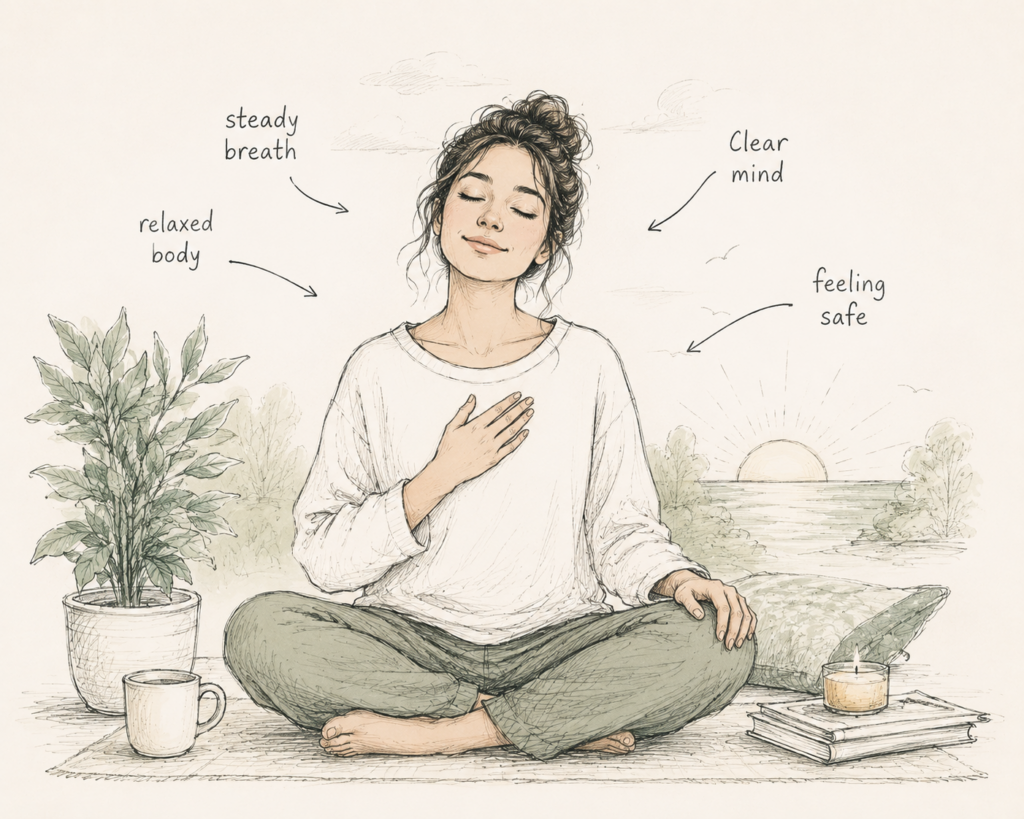
You don’t need a perfect routine to start feeling more like yourself, normal. These three habits work in the moment, and none of them require special equipment.
1. Name it out loud. Simply say, “This is stress,” or “This is anxiety.” It sounds too small to matter, but naming the state pulls your thinking brain back online. That alone can start to ease the spiral. It also allows you to pause and take a moment to bring yourself into awareness.
2. Give your body a longer exhale. A slow exhale that’s longer than your inhale tells your nervous system the danger has passed, even before your mind catches up. Try box breathing: inhale for a count of four, hold for four, exhale for six. Start with three rounds, or my preference is 10. This is my absolute favorite and works on physiological and psychological aspects.
3. Ask what’s actually true right now. Not five minutes from now. Not tomorrow’s shift. Right now, in this exact moment, are you safe? Most of the time, the answer is yes, and your body needs to hear that answer directly from you. You will be able to recognize stress or anxiety and manage it in the moment.
You Don’t Have to Figure Stress and Anxiety Out Alone
I’m not writing this from some finished, fully healed version of myself for stress and anxiety. I’m writing it from my own experience with stress and anxiety, still learning the difference in real time, one hard day at a time. I practice deep breathing, walking in nature, and self-awareness to reel in what I can improve on to feel inner peace.
So the next time your chest tightens or your shoulders creep up toward your ears, pause and ask the same question: is this stress, or is this anxiety? Then meet it with what it actually needs.
If you want to go deeper into this topic, including the personal story that started this whole conversation for me, I wrote about it over on Substack.
https://rootedrnwriter.substack.com/p/anxiety-vs-stress-why-knowing-the
Take some deep breaths, then meet it with what you actually need, not what you think you should be doing about it. If you need step-by-step guidance, I have some workbooks that I created to get you started.
https://rootedwriter.gumroad.com

References:
https://wiredforworry.com/neurobiology